
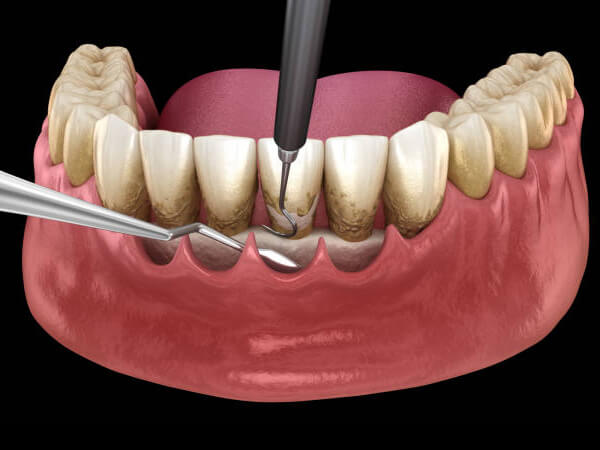
What Is Scaling and Root Planing?
If your dentist or hygienist has recommended scaling and root planing, you might wonder how it differs from a regular dental cleaning. Often referred to as a “deep cleaning,” scaling and root planing is a non-surgical treatment designed to treat gum disease and protect your long-term oral health.
Understanding Gum Disease
Scaling and root planing is most commonly used to treat periodontal (gum) disease.
Gum disease typically starts as gingivitis—red, swollen gums that may bleed when brushing or flossing. If left untreated, it can progress to periodontitis, where bacteria spread below the gumline and begin damaging the tissues and bone that support your teeth.
At this stage, a routine cleaning isn’t enough. That’s where scaling and root planing comes in.
What Is Scaling?
Scaling is the process of removing plaque and hardened tartar (calculus) from:
- The surface of the teeth
- Around the gumline
- Below the gumline (in periodontal pockets)
Dentists or hygienists use specialized instruments, which may include ultrasonic tools, to carefully clean these areas. Removing bacteria and tartar helps reduce inflammation and infection.
What Is Root Planing?
Root planing follows scaling. During this step, the roots of your teeth are smoothed to:
- Remove remaining bacteria and toxins
- Eliminate rough spots where plaque can easily build up
- Help gums reattach to the teeth
By smoothing the root surfaces, the gums can heal and tighten around the teeth, reducing pocket depth.
Why Is Scaling and Root Planing Important?
If gum disease is left untreated, it can lead to:
- Gum recession
- Bone loss
- Loose teeth
- Tooth loss
Scaling and root planing helps:
- Stop the progression of gum disease
- Reduce gum inflammation and bleeding
- Shrink periodontal pockets
- Protect the supporting structures of your teeth
It’s one of the most effective non-surgical treatments for managing periodontitis.
Final Thoughts
Scaling and root planing is a safe and effective way to treat gum disease before it leads to serious complications. While it may sound intimidating, it’s an important step in restoring your gum health and protecting your smile.
If you’ve been advised to undergo this treatment, it’s because your dental provider wants to prevent further damage and help you maintain healthy teeth and gums for years to come.